Earth Day is a global reminder of our shared responsibility to protect the planet we all call home. It is a moment to reflect on the delicate balance of our ecosystems and the urgent need for collective action to preserve natural resources for future generations. While the climate crisis is a universal challenge, its effects are not felt equally across the globe.
For the rural communities we partner with in Uganda, Kenya, and Sierra Leone, environmental protection is a matter of daily survival. The global climate crisis is an issue of deep injustice; these communities contribute the least to global carbon emissions, yet they receive the most destructive impacts. They face a reality of “erratic weather” that defies traditional planning: rainy seasons that never arrive, or flash floods that wash away months of work in a single afternoon.
At Action on Poverty, we believe that sustainability must be locally driven. This Earth Day, we are celebrating the practical, environmental solutions that are helping communities regain control over their futures.
Harnessing the Sun: Solar Innovation in Kenya
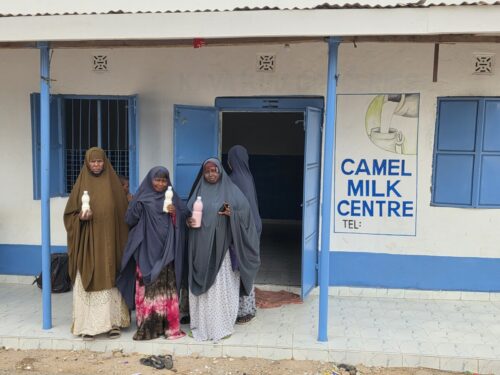
In the intense heat of Garissa County, temperatures regularly climb high enough to spoil fresh camel milk within just hours. For local traders, the sun was once a threat to their primary source of nutrition and income, today, we have turned that challenge into a solution.
The Impact: Our Solar-Powered Cooling Centre now cools 940 litres of milk daily.
The Result: By reducing spoilage, we have bridged the “availability gap,” leading to a 65% increase in revenue for herders and allowing families to move from two meals a day to three.
Resilient Seeds: Banking on the Future in Uganda
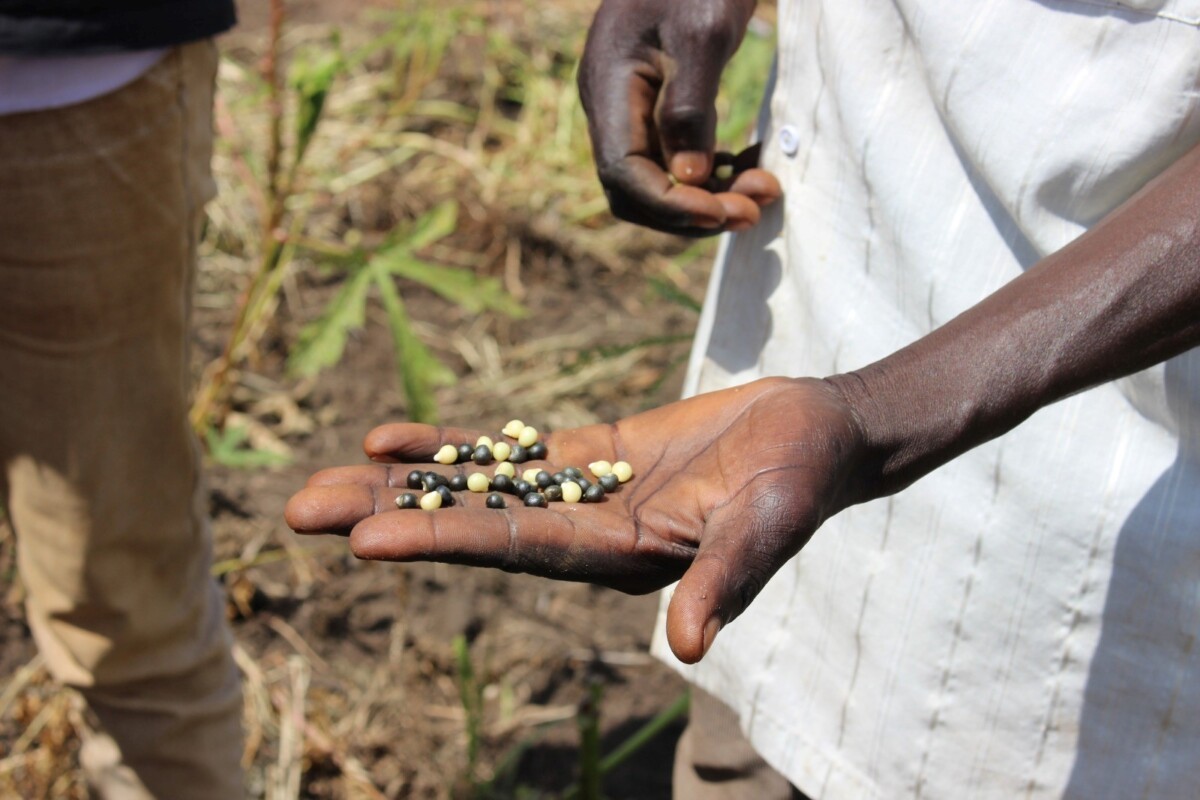
When rainfall becomes unpredictable, farmers can no longer rely on traditional planting calendars. To combat this, we have focused on strengthening the “seed-to-table” chain in regions like Palabek.
The Impact: We have supported the production of 12,113kg of resilient cowpea seeds and established community seed banks.
The Result: These banks act as an environmental safety net. If a harvest is lost to a sudden dry spell, the community has the reserves to replant. Currently, 84% of participating farmers have successfully increased their income by over 50%.
Guardians of the Coast: Restoring Sierra Leone’s Ecosystems
Women as guardians of the Coast
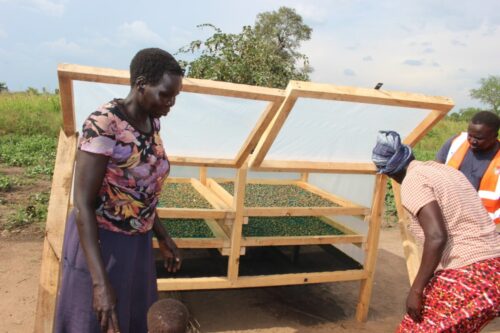
Coastal erosion and mangrove loss are driving a humanitarian crisis in Sierra Leone’s Pujehun District. Mangroves are nature’s “green wall,” protecting villages from storm surges. We are incredibly proud of our Guardians of the Coast, where women are taking full charge of environmental restoration.
- Restoring the Green Wall, women are leading the restoration of 10 hectares of mangroves. This provides a natural defense against storm surges and coastal erosion, protecting the homes and safety of over 10,000 people living in low-lying areas.
- Clean Energy & Conservation: By equipping households with fuel-efficient cookstoves that use two-thirds less wood, we are directly slowing local deforestation and ensuring the newly planted mangroves remain protected.
Connecting Local Impact to Universal Goals
We are proud of these projects because they demonstrate a fundamental truth: environmental health and human dignity are inseparable. To truly lift communities out of poverty, we must also safeguard the land and sea that sustain them.
Our work is part of a much larger international roadmap. In 2015, world leaders at the United Nations adopted the Sustainable Development Goals (SDGs)—a shared blueprint for peace and prosperity for people and the planet. Our initiatives are direct contributions to this global effort, specifically focusing on Climate Action (Goal 13) and Life on Land (Goal 15).
Currently, there is a global shift toward what the European Union and the UN call “Nature-Based Solutions.” This approach moves away from traditional, “grey” infrastructure (like concrete sea walls) in favor of working with nature to solve human challenges.
By restoring 10 hectares of mangroves in Sierra Leone, we are implementing this exact strategy. These coastal forests serve as highly efficient “carbon sinks”—ecosystems that are significantly more effective at capturing atmospheric carbon than terrestrial forests. While these mangroves protect 10,000 people from immediate storm surges, they also play a quiet, vital role in the global effort to stabilize our climate.
We are actively working toward these international standards every day. This Earth Day, we are proud to prove that local resilience is an essential piece of our global future.